
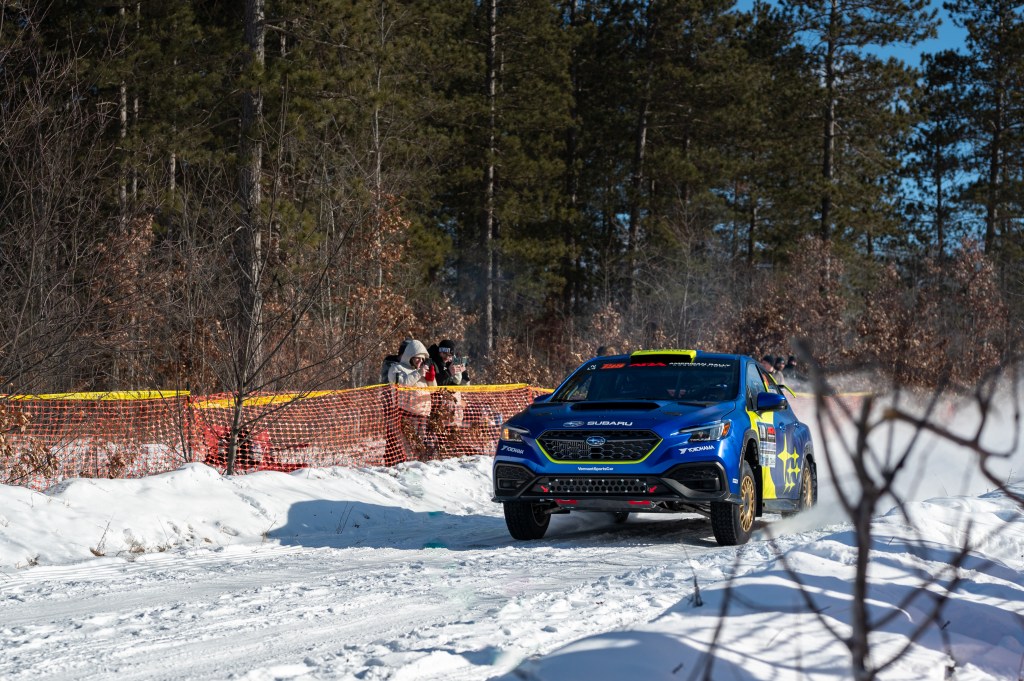
In international rally competition, ice is usually conquered via brute force: tires covered with studs that bite into the ice like claws.
Sno*Drift is different. As the season opener for the American Rally Association (ARA), it presents a unique technical challenge for teams: tire studs are prohibited. This rule removes the “crutch” of spikes and forces teams to generate friction through tire manipulation alone.
The result is a contest decided not just by driver skill, but by the efficiency of the teams modified tires.
How Teams Adapt
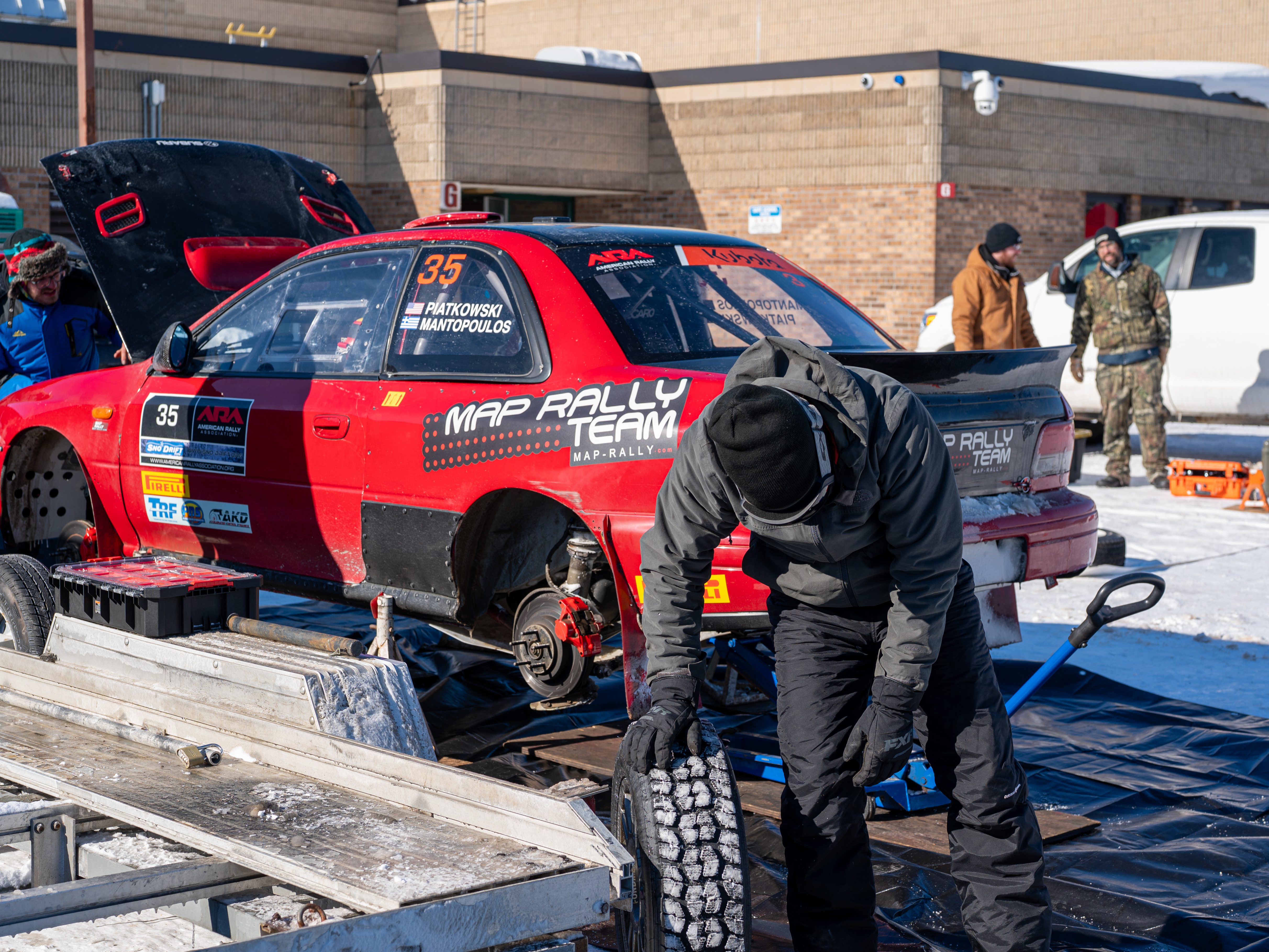
Without studs, a standard winter tire offers a dangerously low coefficient of friction on sheet ice. To combat this, some teams utilize a process known as tractionizing.
Unlike the more common method of cutting slits in the tread, tractionizing involves mechanically abrading the tire surface—often using spinning wire brushes or custom spike rollers—until the rubber takes on a rough, velcro-like “fuzzy” texture.
The decision on which type of tires to use deeply relies on the current conditions of the track, which can change vastly over very short periods of time. The conditions at the 2026 Sno*Drift event stayed relatively stable with the sun being out for the majority of Saturday.
The Compromises
Unfortunately the trade-off for these tires at Sno*Drift is not the greatest. A highly tractionized tire offers superior immediate grip but degrades rapidly. As the “fuzz” wears off, the tire returns to a standard state, and lap times plummet, no traction means no acceleration.
Thermal Management in the Negative
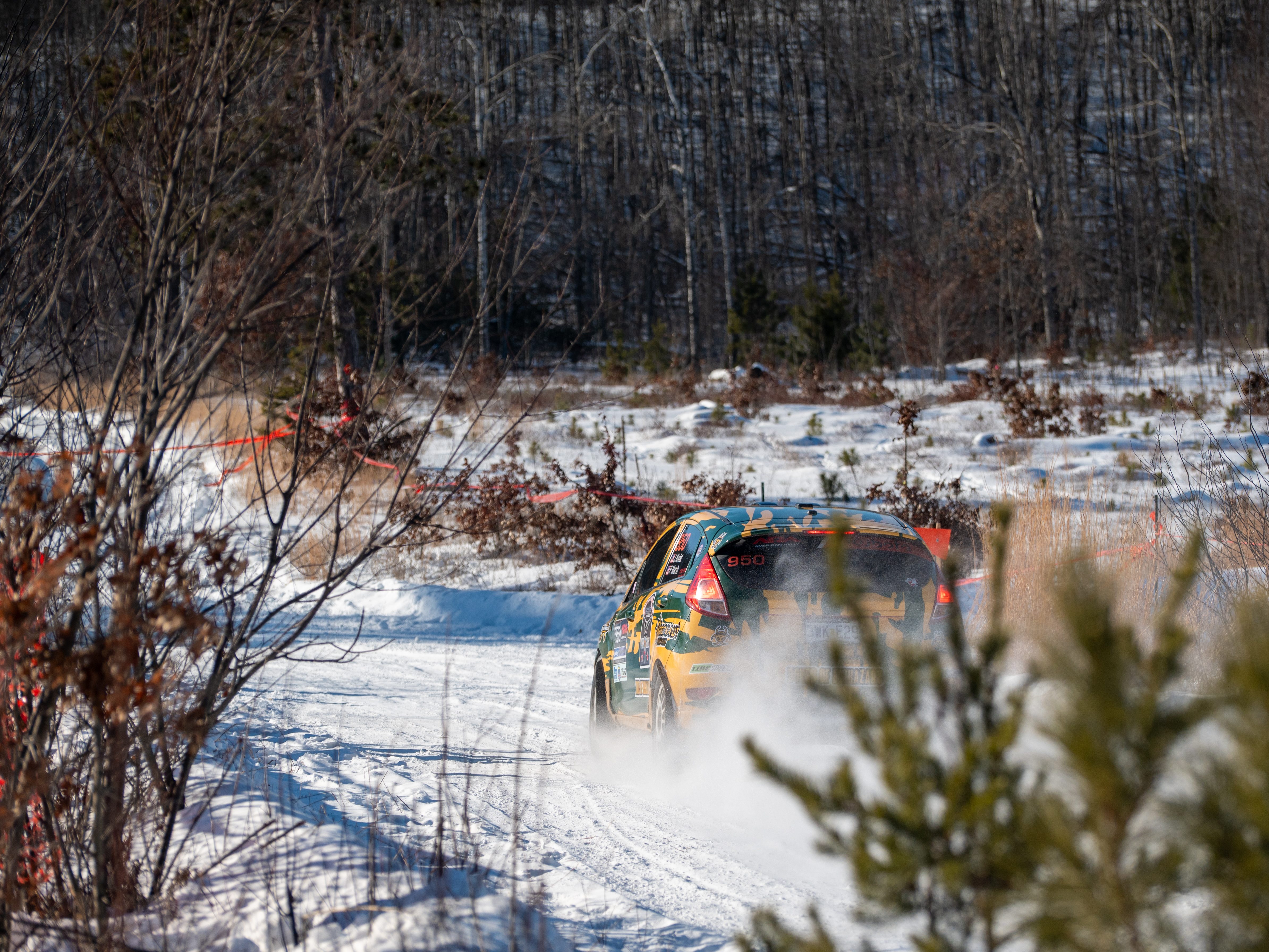
Beyond the tires, the cold density of the air presents its own challenges. While engines love the oxygen-rich intake air (increased efficiency), fluids struggle.
Often teams are observed running aggressive radiator blocking (cardboard or plastic inserts) to maintain optimal oil and coolant temperatures in freezing conditions. If the damper shocks stay too cold, the fluid viscosity increases, making the suspension stiff and non-compliant over the rough icy terrain.
The Verdict
Sno*Drift remains an outlier in global motorsport. It is a slow-motion ballet where the physics of friction are pushed to their absolute limit. For the engineers, it isn’t about how much power you can make—it’s about how much of that power the environment will allow you to put down.

 techinsports.com
Leave a comment